
Heat Treatment Oven
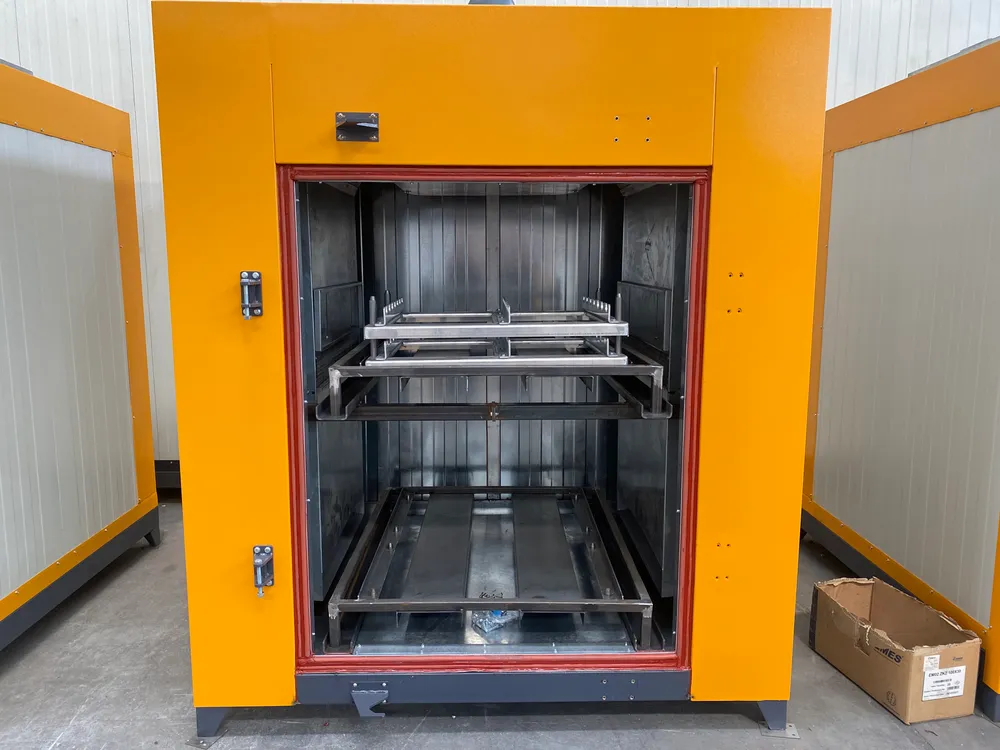
Heat Treatment Oven
Heat treatment ovens are ovens used to alter the physical, and sometimes chemical, properties of metals and occasionally other materials. These ovens change the microstructure of the material by heating it at a specific temperature for a specific period and then cooling it in a controlled manner.
The main purposes for which heat treatment ovens are used are:
-
Hardening: Used to increase the hardness and durability of the material. The material is heated to a specific temperature and then cooled rapidly.
-
Annealing: Used to reduce the hardness of the material, to relieve internal stresses that arise especially after cold working, and to improve the machinability of the material.
-
Normalising: Used to improve the grain structure of the material and to obtain a homogeneous structure.
-
Solution Treatment and Ageing: Used especially with aluminium and certain stainless steels. The material is heated to the solution treatment temperature and then cooled rapidly. Subsequently, the hardness and durability of the material are increased through the ageing process.
-
Carburising and Nitriding: These are surface hardening processes. The hardness of the surface is increased by adding carbon or nitrogen to the surface of the material.
Heat treatment ovens are generally equipped with special insulation materials capable of operating at high temperatures, temperature control systems, and fans that circulate air or other gases. The ovens keep the material at a specific temperature according to its heat treatment process.
Heat treatment optimises the mechanical properties, grain structure, hardness and other physical properties of the material. This makes the material more suitable for a specific application.